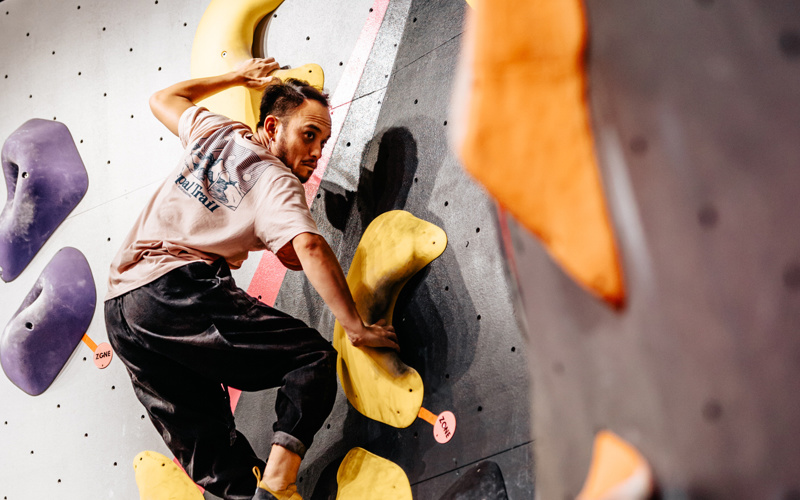
To enjoy longevity in climbing as a sport, it is crucial to cultivate practices to build resilience and better performance, says Sarita Mok, physiotherapist at One Percent Physio & Rehab.
Bouldering is a sport that challenges both the body and mind. One can easily get hooked to it as tackling a problem, finally sending it, and moving on to a tougher route can be an exhilarating experience. However, bouldering can also take a toll on the body due to the high physical demands it places. It is therefore essential to adopt good practices and build sustainable habits into your climbing routine to reduce injury risks. This will help enhance your performance, create a strong foundation, and build resilience to climb better and continue enjoying the sport for many years.
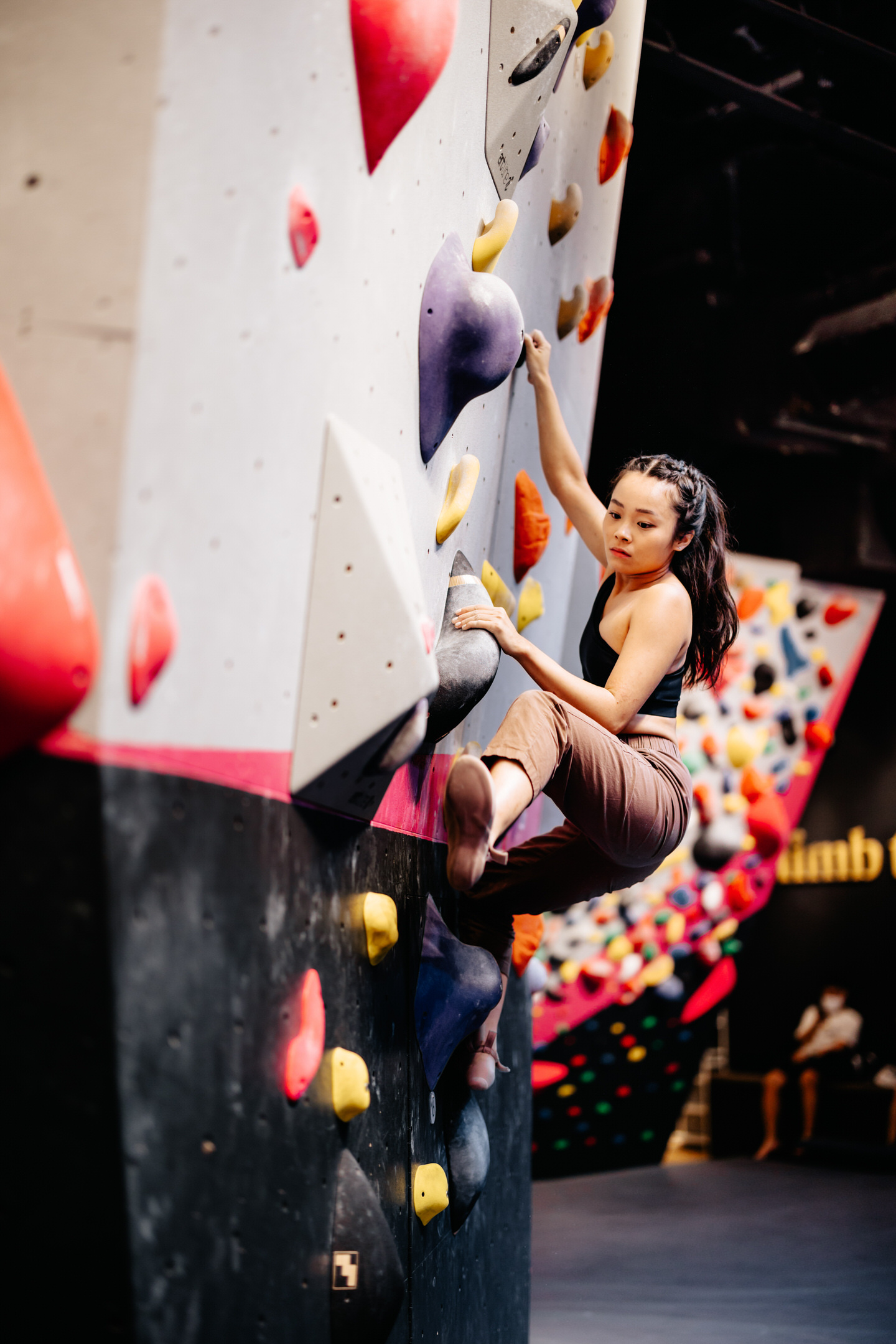
Sustainable habits help reduce injury risks in climbing. Here are five good habits you can cultivate to climb longer and better:
1. Set aside dedicated time for warm-up before your climb.
Bouldering requires a strong core for balance, explosive power to execute dynamic movements, and strong upper and lower limbs to manoeuvre small holds and slabs. A proper warm-up is crucial to prime the muscles used during your climb. It would help improve mobility, especially in your shoulders, hips, and ankles, which is key to better climbing performance (Diez-Fernández, 2023). Your warm-up should also focus largely on dynamic stretches to improve flexibility of your muscles and mimic climbing movements.
2. Take adequate rest between boulder problems.
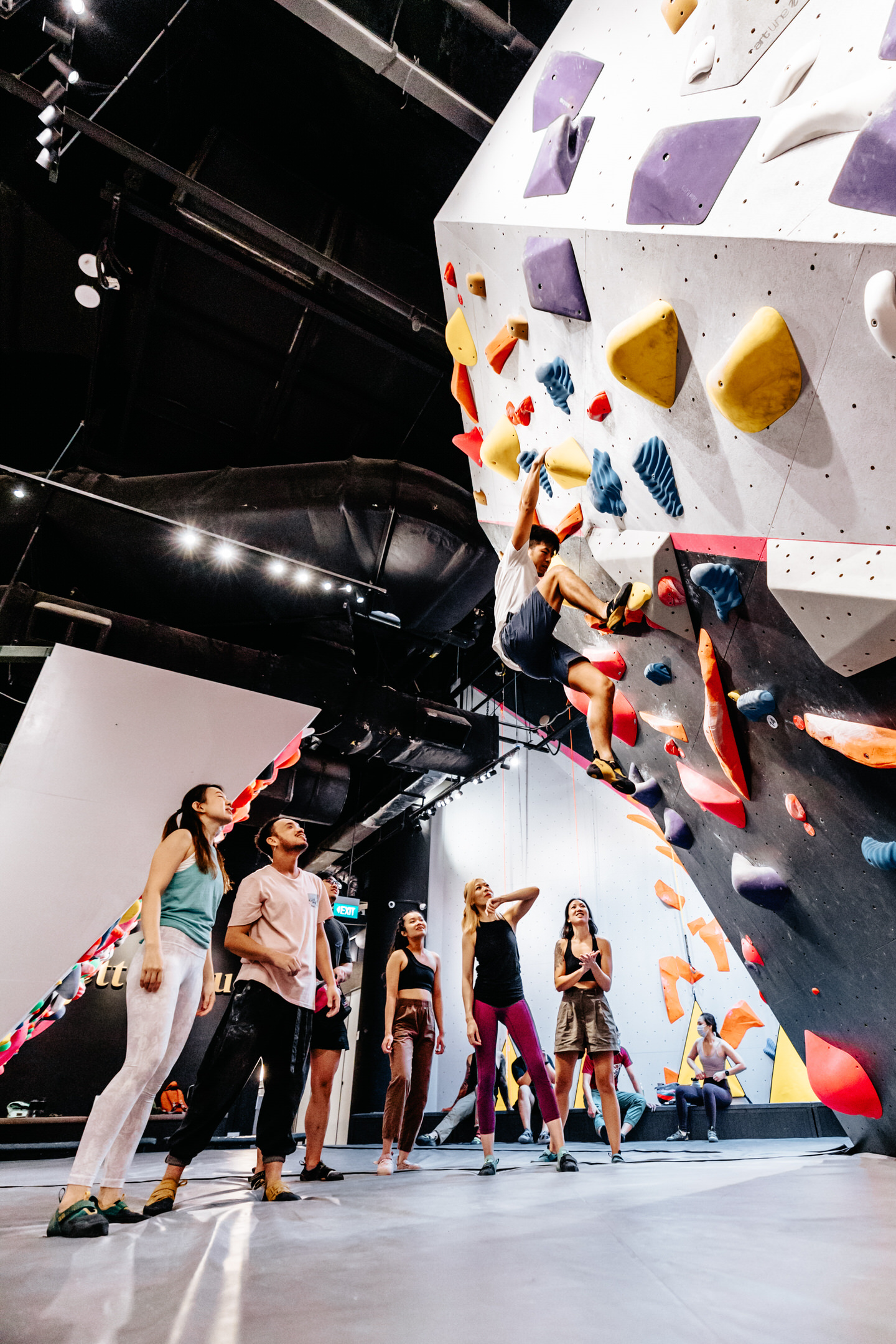
Boulder problems are likened to sprinting because it usually takes a short time to attempt or complete a problem. If your rest breaks between each boulder problem is too short, it does not give your muscles adequate time to recover, which puts you at risk of overuse injuries like tendonitis. It is good to give a relative rest time of at least 3-5 minutes between problems due to the amount of power and effort used by the body. “Training past the point of power decline is counterproductive and is a great way to flirt with injury.” – Steve Betchel
3. Get proper sleep.
Bouldering is an intensive exercise that leads to micro damages in our muscles, and this is the case even for recreational climbers. During sleep, our body produces hormones that will aid in muscle repair and regeneration. Other than that, it has been reported that poor sleep impacts production of isometric force (Charest and Grandner, 2020) which is often needed to sustain holds or positions while bouldering. Poor sleep also negatively impacts your body’s recovery and affects your cognitive abilities, such as decision-making and reaction time, which are essential in tackling a boulder problem. This, in turn, increases your risk of injuries (Fullagar et al, 2014). Hence, having adequate and good quality sleep is a very important habit to build into your daily routine.
4. Integrate active recovery and cross-training to improve climbing performance.
Bouldering can place significant strain on the body especially if you are new to the sport and are adapting to new movements. It might be worthwhile to consider engaging in low-intensity activities like yoga, cycling, or swimming to remain active on your rest days without overloading your muscles. That being said, investing time in strengthening bigger muscle groups other than your fingers and upper body (which are mostly used during bouldering) will prevent muscle imbalances, reduce risk of injury, ensure functionality, and improve overall climbing performance. You might be concerned that increased muscle mass will increase body weight, which might in turn make it harder to climb. However, the perk of having more muscle mass is having more contractile muscle fibres that generate more force, thereby improving performance (Saeterbakken et al, 2024).
5. Listen to your body and seek help early.
Longevity in climbing is about protecting your body from injuries and preventing them before they become worse. Injuries usually happen when the load the body is subjected to exceeds its capacity. The body will show you signs when this is happening — you might experience soreness, fatigue, regular cramps, or some form of pain. This is your cue to take a break or stop for the day to rest. It is also essential to ensure that you progress the intensity and frequency of your climbs gradually to prevent injuries caused by overtraining or overloading.
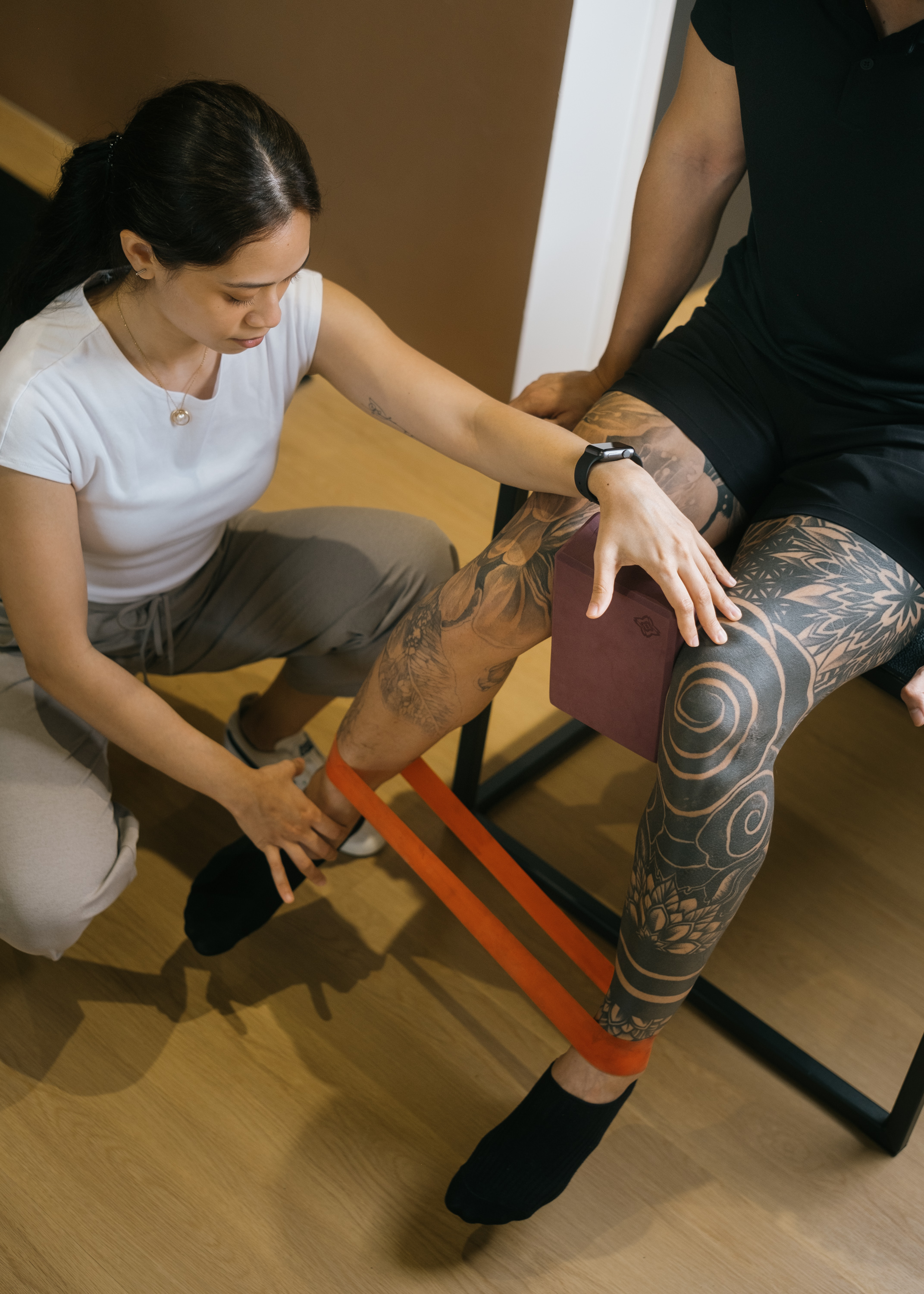
It is also a good habit to seek professional help early if you are experiencing persistent pain or discomfort for prolonged periods of time to prevent your injury from worsening. Sometimes, just rest alone may not be sufficient. Instead, you might benefit from having a tailored treatment programme that you can strictly follow, which would improve healing outcomes (Piper et al, 2017).
Bouldering is a physically and mentally demanding sport, whether you are a seasoned or new climber. By building sustainable habits, you can protect your body, enhance your performance, and keep doing what you love for years to come. Bear in mind that progress is not just about climbing harder—it is about climbing smarter. Take care of your body today, and it will take care of you on the wall tomorrow.


