If you are new to climbing, getting comfortable with the basics is crucial to building confidence and good habits.
Bouldering is much more than just having physical strength — climbing well comprises elements of body awareness, balance, and efficient movement.
We have narrowed down five fundamental techniques and training every new climber should have in their toolkit.
1. Footwork
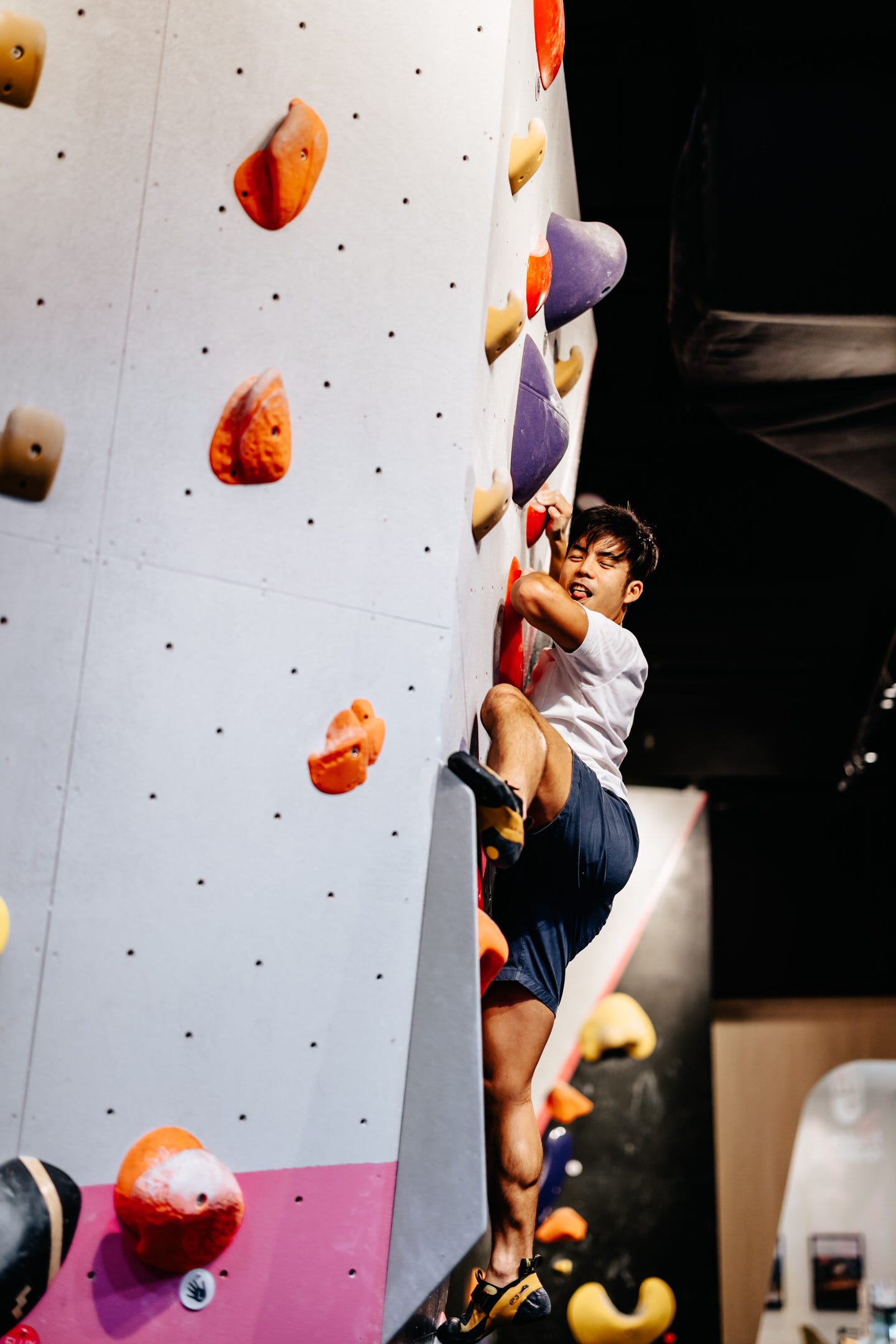
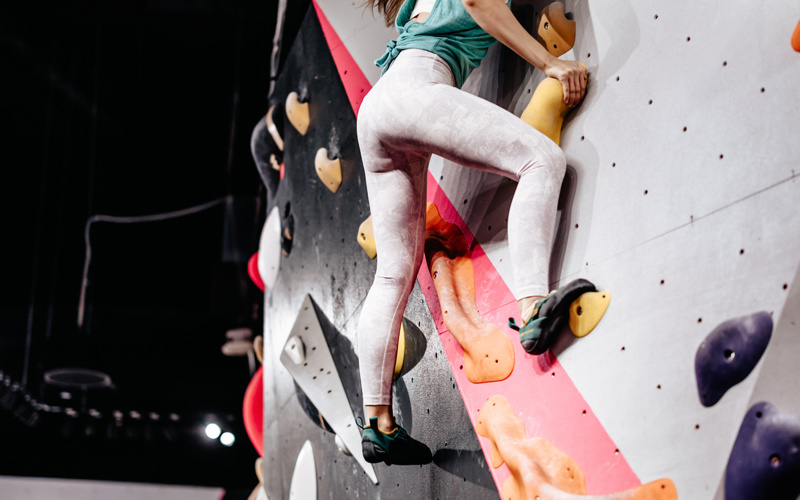
Most new climbers naturally tend to focus on pulling hard, but good footwork is what makes the difference between falling and flowing. Good footwork is defined by precision, control, and efficiency. Constant shuffling (or ‘tapping’) of the feet and micro-adjustments on footholds are usually tell-tale signs of poor footwork and not trusting your feet; and the more time you spend on the wall adjusting your feet placement, the less energy there is to finish a boulder problem.
Training ‘silent feet’ — the practice of placing your feet quietly and deliberately on footholds — trains precision, awareness, and control. Instead of stomping and shuffling your feet on footholds, try intentionally and consciously watching your foot placement as you climb. Aim to land them gently, quietly, and smoothly on footholds. One method of training precise footwork is to allow yourself to place your foot on a foothold only once, and not make any more adjustments after that.
Use the toe or inside edge of your climbing shoe to gain maximum surface contact. When climbing, don’t shy away from repositioning your foot if the placement doesn’t feel secure, but make it an intentional habit to refrain from micro-adjustments.
2. Matching
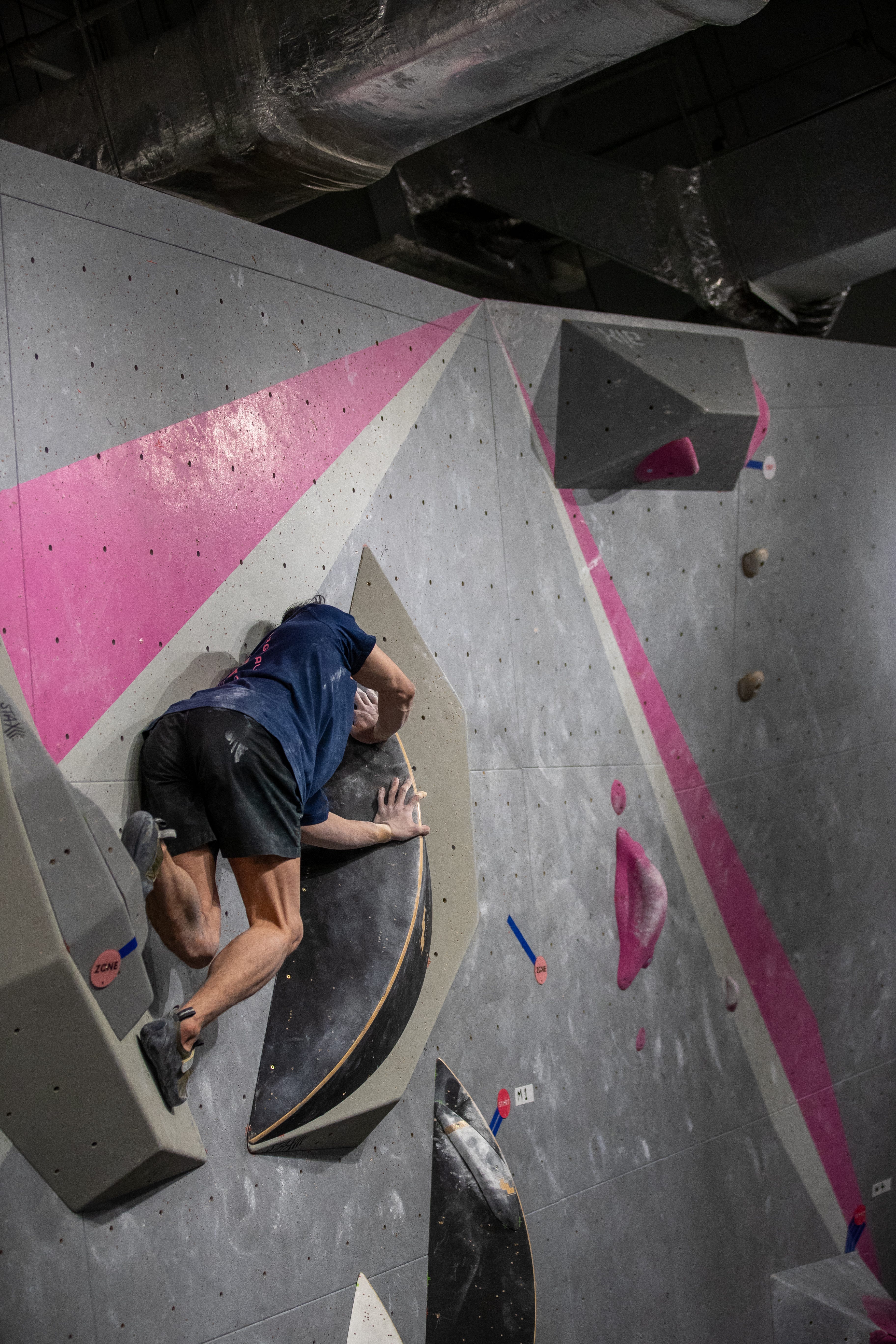
Matching refers to placing both hands or both feet on the same hold to set up for your next move. It is the most commonly used technique in climbing, but its proper execution is often mostly overlooked or neglected.
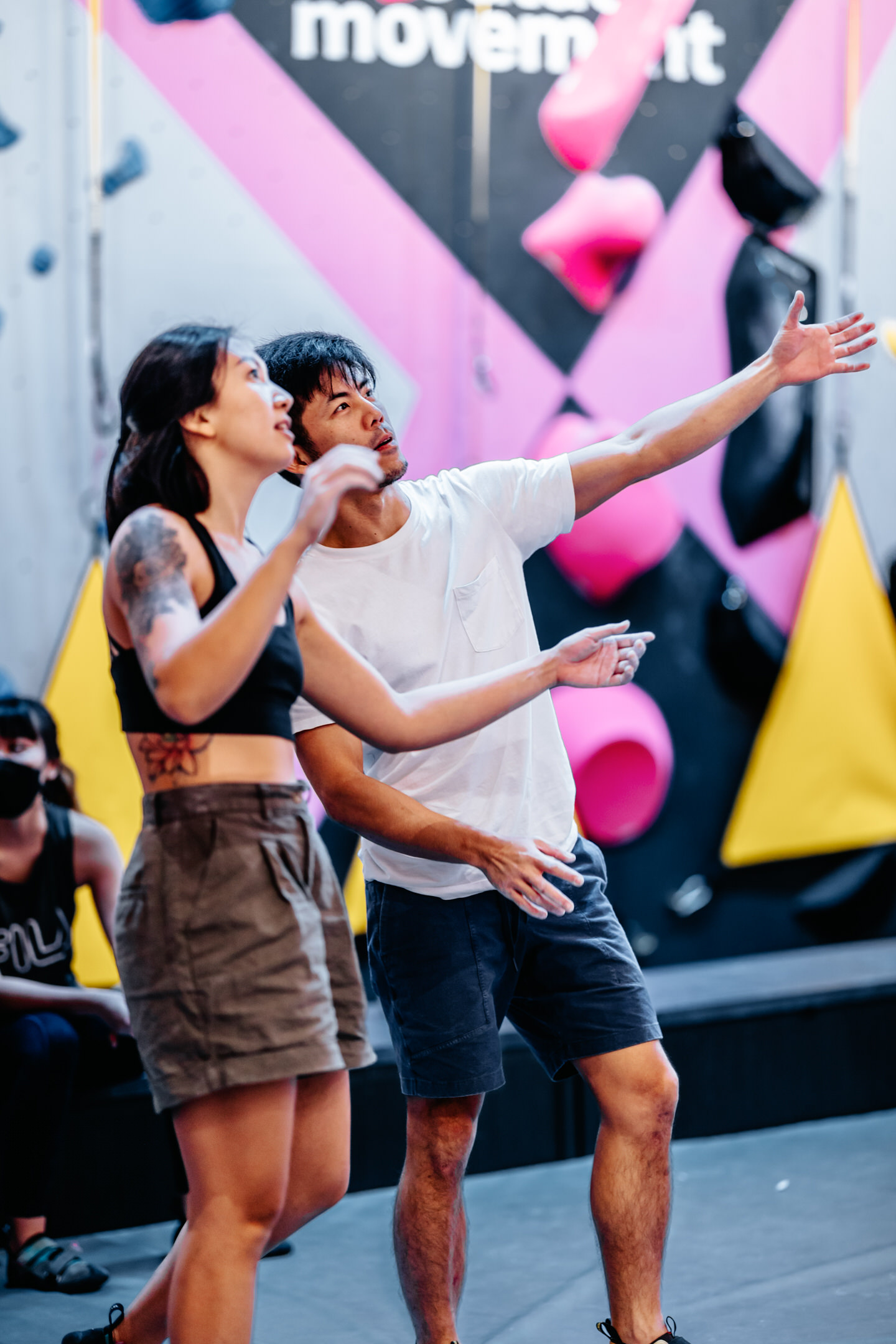
Learn to read a boulder problem before hopping on, and plan your sequence carefully. This not only saves you time and energy on the wall, it also helps you identify where matching hands or feet is required, so you can plan ahead and check how much room there is to work with for your hands and feet. Poorly executed matching could mean you slip off a hold, while good matching creates space to reposition efficiently and flow smoothly for the next move.
3. Flagging
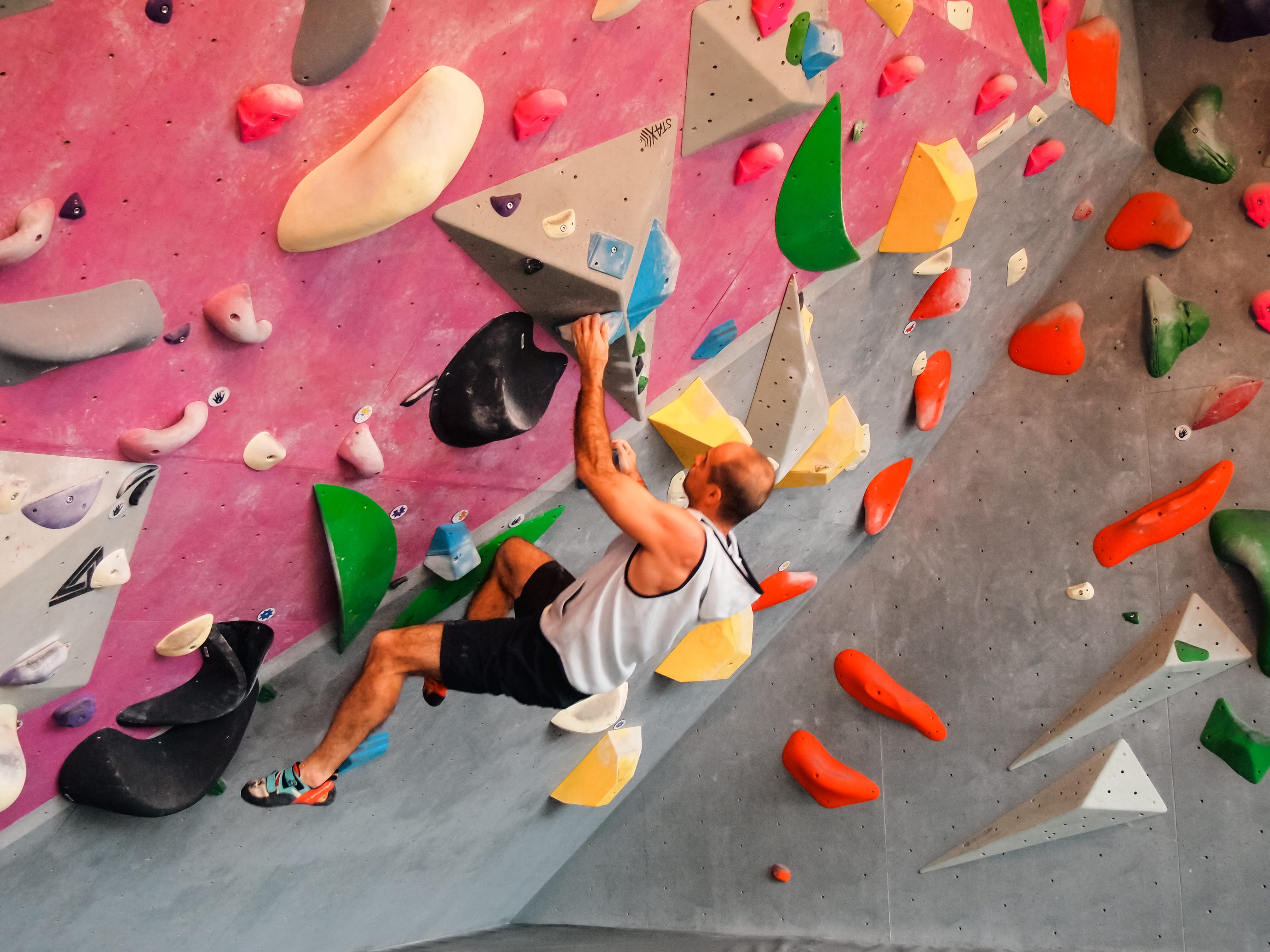
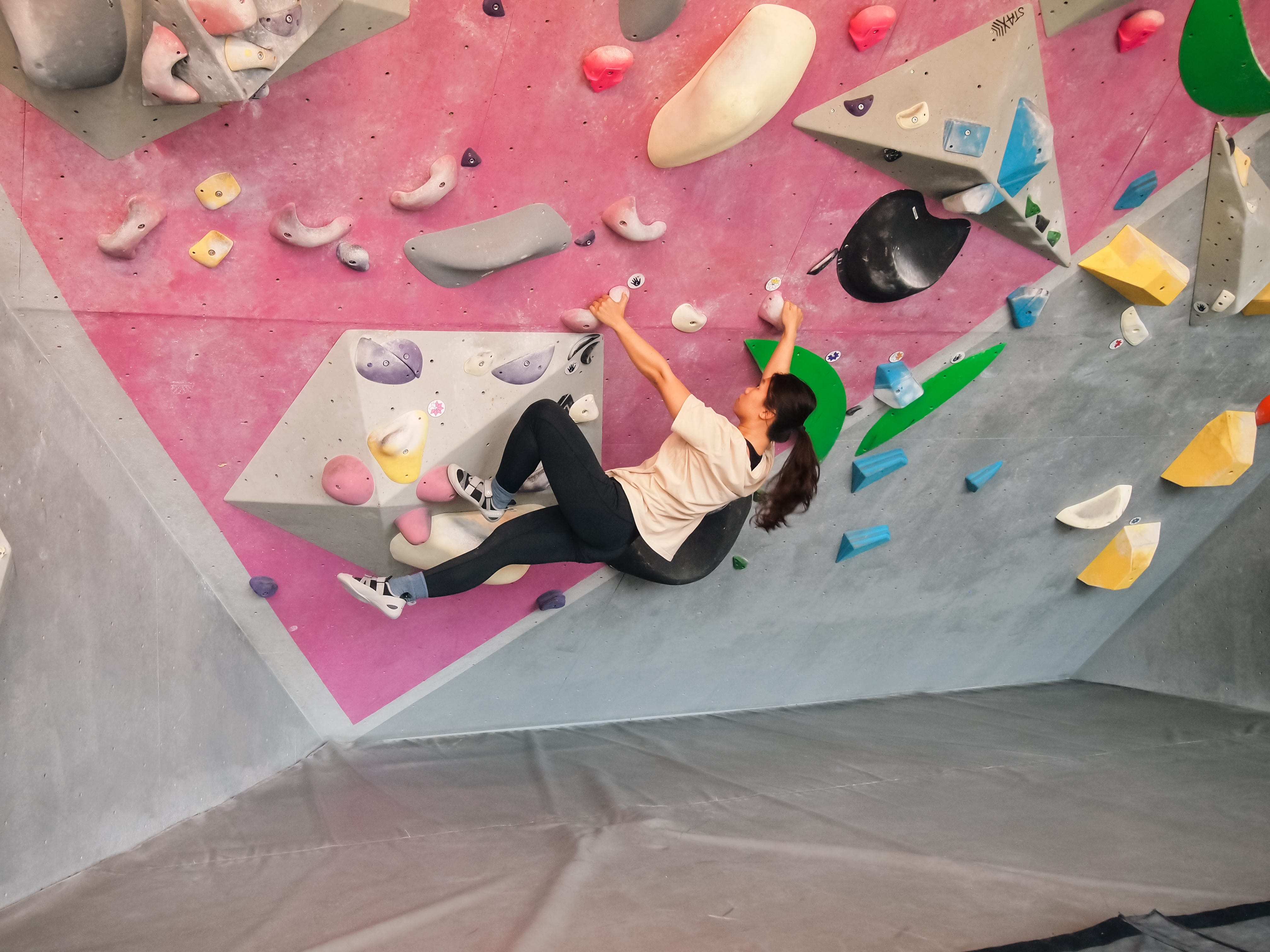
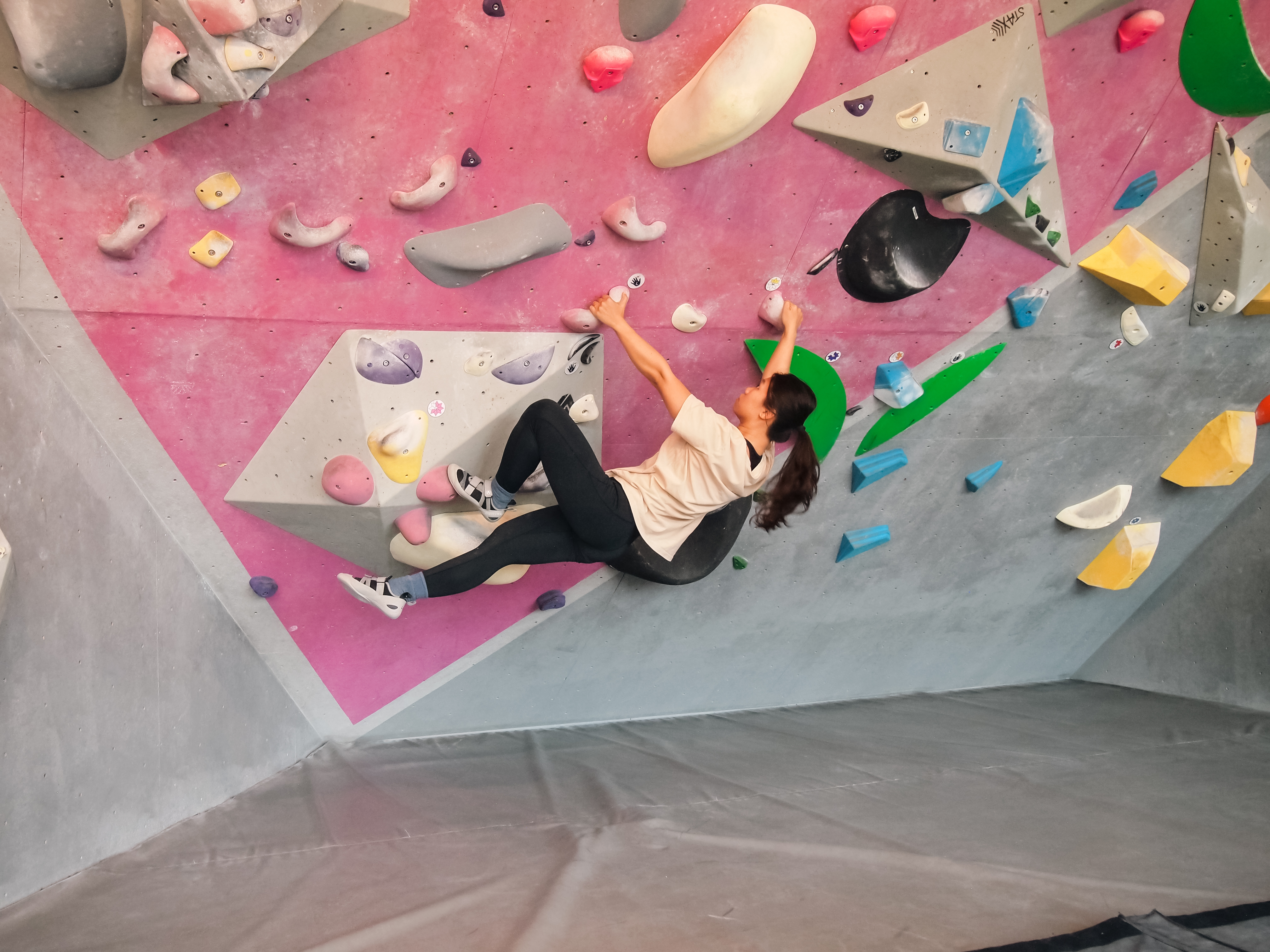
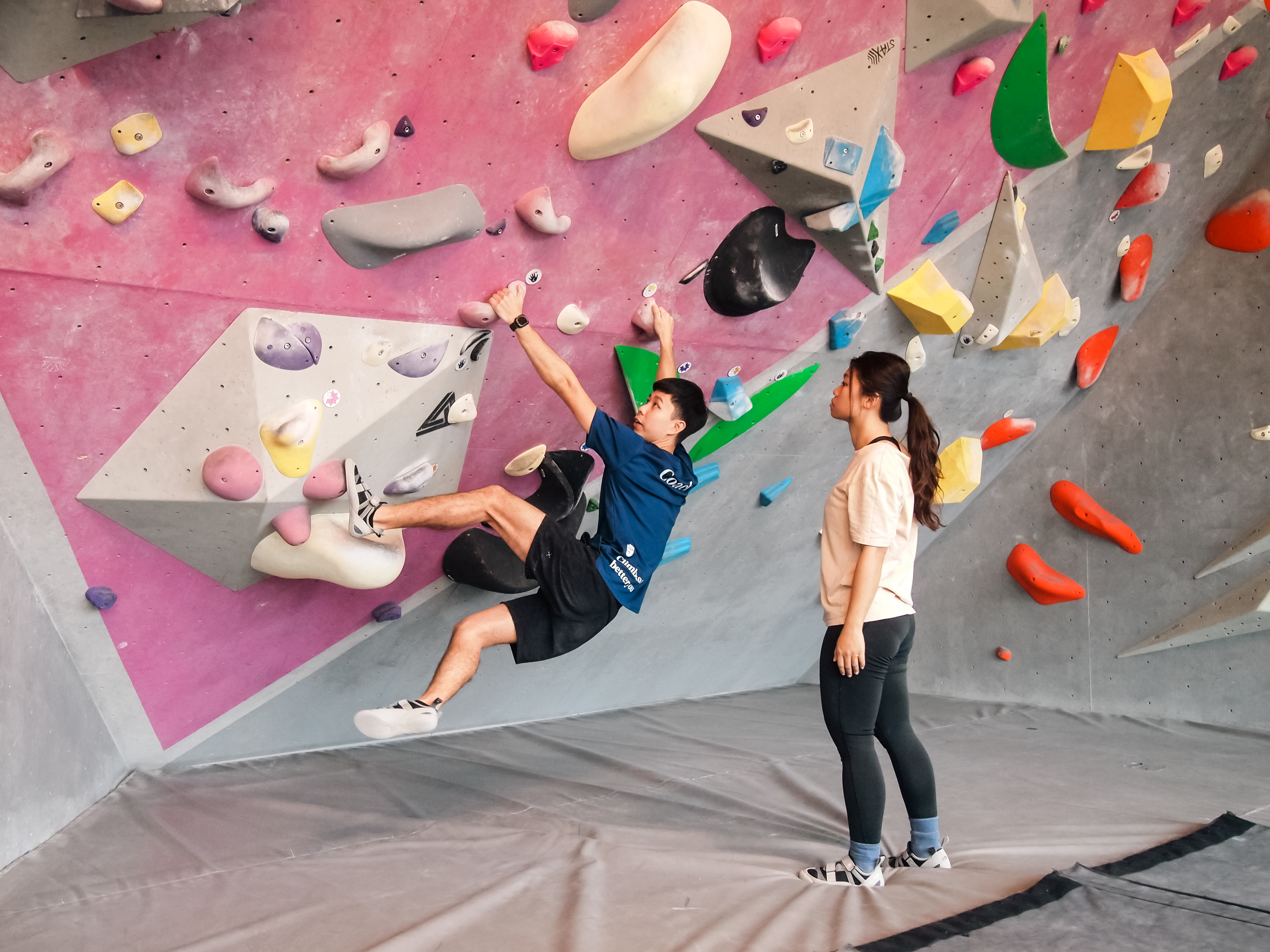
Learning to flag unlocks the secret to finding balance and stability in awkward positions, especially on verticals and overhangs, or when one foot doesn’t have a hold to step on. Flagging utilises body positioning to allow you to make the next move in a stable and static manner; it involves extending your free leg out onto the wall to counterbalance your centre of gravity and prevent the body from swinging out (barn-dooring).
When learning to flag, be aware of your centre of gravity and do what feels right to maintain a sense of balance. If you are not maintaining balance, you may be using the wrong foot, or not pressing the free-hanging foot into the wall for leverage. It boils down to counterbalancing in order to find a position of stability on the wall.
4. Weight Shifting
Using body positioning efficiently is what turns a good climber into a great climber. Oftentimes, this involves being conscious and aware of your centre of gravity. The next time you climb onto the wall, try shifting your weight by moving from your hips, and have a sense of how your weight flows or centre of gravity changes through each move.
Be intentional and experiment with moving your hips towards the foot that you are stepping on, and see how it improves the flow in your climb. By utilising body positioning, you will find that there is less strain on your arms, which means more fuel in your tank to overcome the crux (the most difficult sequence) in a problem.
5. Reading the Problem
Reading a boulder problem is a skill that is acquired through experience. It allows you to analyse a climb and sequence of moves (or beta) even before you start climbing it. Start by observing the placement of all the holds, and visualise how you would move through the sequence — where the hands and feet should go at every part of the sequence, and where the crux lies.
Mentally rehearse the moves and transitions and think about finding the most stable body positions. Once you have planned your sequence of moves, start climbing the problem and move through your sequence with intention. Sometimes, the problem throws up surprises (such as a hold that feels much poorer than it looks); don’t be afraid to make adjustments and change the sequence as needed.
While there is no ‘one-size-fits-all’ in bouldering, these basic techniques and skills form a strong foundation that doesn’t just turn you into a better climber, it also makes bouldering more enjoyable, fun, and sustainable. To progress rapidly with expert guidance in your early climbing stages, consider joining a short course or programme such as BM’s 6-week Boot Camp that equips you with all the knowledge and skills you need to be a proficient climber.
Enjoy the movements and flow, and before long you will see yourself floating up the wall with grace and confidence.